


spec sheet leads with an IP rating - IP54, IP55, IP65 - as if it were a simple quality score where higher means better. It is not. The IP code is a precise statement about dust and water, and choosing among these three levels is really a choice about how the cabinet manages heat, how it will be serviced, and what your site will throw at it for the next ten years. Pick the wrong one in either direction and you pay: too low and dust and water get in; too high and you have bought a sealed box that struggles to stay cool.
This guide decodes the numbers, explains the trade-off behind them, and tells you which rating fits which site.

The IP (Ingress Protection) rating comes from IEC 60529 and has two digits. First digit: solids. Second digit: water.
5 - dust protected: dust may enter, but not enough to interfere with operation.
6 - dust tight: no ingress at all.
4 - splashing water from any direction.
5 - water jets (a nozzle, low pressure) from any direction.
6 - powerful jets; temporary flooding of the enclosure itself is tolerated.
IP54 sheds splashes but breathes dust-filtered air. IP55 adds jet resistance - rain driven by wind, hose spray nearby. IP65 is a fully sealed box: no dust in, no water in, nothing in.
One caution buyers miss: the rating says nothing about corrosion, UV, impact, or explosion venting. Those come from coating class, finish spec, and the fire-code design - a separate conversation (see corrosion classes C4/C5 for coastal sites).
The Trade-Off Nobody Puts on the Datasheet
a battery makes heat, and heat has to leave the enclosure - through either air exchange or a sealed thermal path.
A (filtered fans or louvers) cools cheaply and well, but moving outdoor air through the box means IP54-class protection at best, and it carries dust, humidity, and salt into the enclosure.
A (IP65) keeps the environment out completely, but now heat must exit through a heat exchanger, a liquid-cooling loop, or conduction - more cost, more complexity, and a thermal system that itself needs service.
Neither is wrong. But they are different machines:
IP54 suits ventilated designs: sheltered outdoor locations, mild-dust environments, sites where air quality is decent and maintenance access is easy. It is the rating of most classic air-cooled cabinet designs.
IP55 is the workhorse for standard outdoor installations: filtered ventilation with better sealing, handling wind-driven rain and nearby washdown activity. For most C&I yards, IP55 with a filtered, slightly pressurized enclosure is the practical sweet spot.
IP65liquid-cooled battery storage systems - and to genuinely hostile sites: deserts, coastal salt fog, dusty industrial parks, places with pressure washing. Everything inside is protected from the atmosphere, at the price of an engineered thermal loop.
. As temperature swings, sealed air volumes condense moisture on internal surfaces unless the design includes desiccants, heaters, or breathers engineered for it. IP65 does not mean "no humidity problems" - it means the humidity problems are designed out or designed in. Ask which.
The number on the datasheet is the enclosure's rating as manufactured. The rating that matters is the - and installations break enclosures.
Every cable gland, door seal, fan filter, and hatch is an ingress path. A cabinet rated IP65 with field-drilled conduit entries sealed by hand is, in practice, whatever the installer achieved. Specify:
Factory-sealed cable entries, or gland systems rated to match the cabinet.
Door seal inspection and replacement as a maintenance item (gaskets age).
Filter service intervals for any ventilated design - a clogged filter is both an ingress risk and a thermal derate.
Verification that third-party mounted accessories (lights, cameras, antennas) meet the same rating or are placed deliberately.
system, with penetrations, not just the empty cabinet. This single question filters out a surprising amount of spec-sheet optimism.

In North America you will also see NEMA ratings. Roughly: NEMA 3R ≈ outdoor rain protection (weaker on dust than IP55), NEMA 4 ≈ IP65-class sealing and jets, NEMA 4X adds corrosion resistance (stainless or composite). The mappings are not exact - NEMA includes tests IP does not, like ice and corrosion - so specify both where relevant rather than "converting" one into the other.
IP54 is sufficient and keeps thermal design simple.
Standard open-air C&I yard, rain and wind exposure, occasional nearby washdown: IP55 - the default recommendation for most outdoor commercial cabinets.
Coastal, desert, dust-heavy industrial, or washdown-prone sites - or any liquid-cooled system: IP65, with attention to the condensation-management design and heat-exchanger maintenance plan.
Two more site realities interact with this choice. Ambient heat: a sealed IP65 cabinet in a hot climate leans entirely on its cooling loop, so validate thermal capacity at extreme, not at nominal. And noise: sealed designs with heat exchangers sound different from fan-ventilated ones - if the cabinet sits near an office or neighbor, check the acoustic spec too.
IP54/IP55 ventilated: filter replacement on a schedule, gasket inspection, occasional internal dust check.
IP65 sealed: door-seal integrity is critical (every opening is a breach), desiccant/breather service where fitted, and cooling-loop service (coolant, heat-exchanger fins, pumps) as the thermal backbone.
Either way, log it: moisture found inside a battery enclosure is a reportable event, not a cleaning task - the battery's protective electronics and the site's fire-risk assessment both assume a dry box.
IP54, IP55, and IP65 are not good-better-best - they are three different answers to one trade-off between keeping the environment out and letting heat out. Match the choice to your site's dust, water, and climate reality, verify the rating of the installed system rather than the brochure box, and make the resulting maintenance items explicit in the O&M plan. The right rating is the one whose compromises your site can live with for a decade.

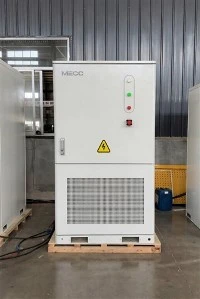
MECC 50KW 112KWH BESS Battery Energy Storage System
The MECC 50kw 112kWh Battery Energy Storage Cabinet is a high-capacity energy storage solution designed for industrial and commercial applications. Featuring 358V, 314Ah lithium iron phosphate (LiFePO4) battery, it ensures long-lasting, safe, and efficient energy storage.
High-efficiency 50kW/112kWh Industrial and Commercial Energy Storage System (C&I ESS). Features LiFePO4 battery, peak shaving, and smart EMS. Reduce operational costs and ensure power backup. Inquire for custom BESS solutions.
less than 1.2 square meters, this 112kWh cabinet features a pre-integrated all-in-one design, reducing on-site installation time by 40% compared to modular rack systems.